Rapid MVP Design using AI tools to Enable Early Customer Onboarding

Why

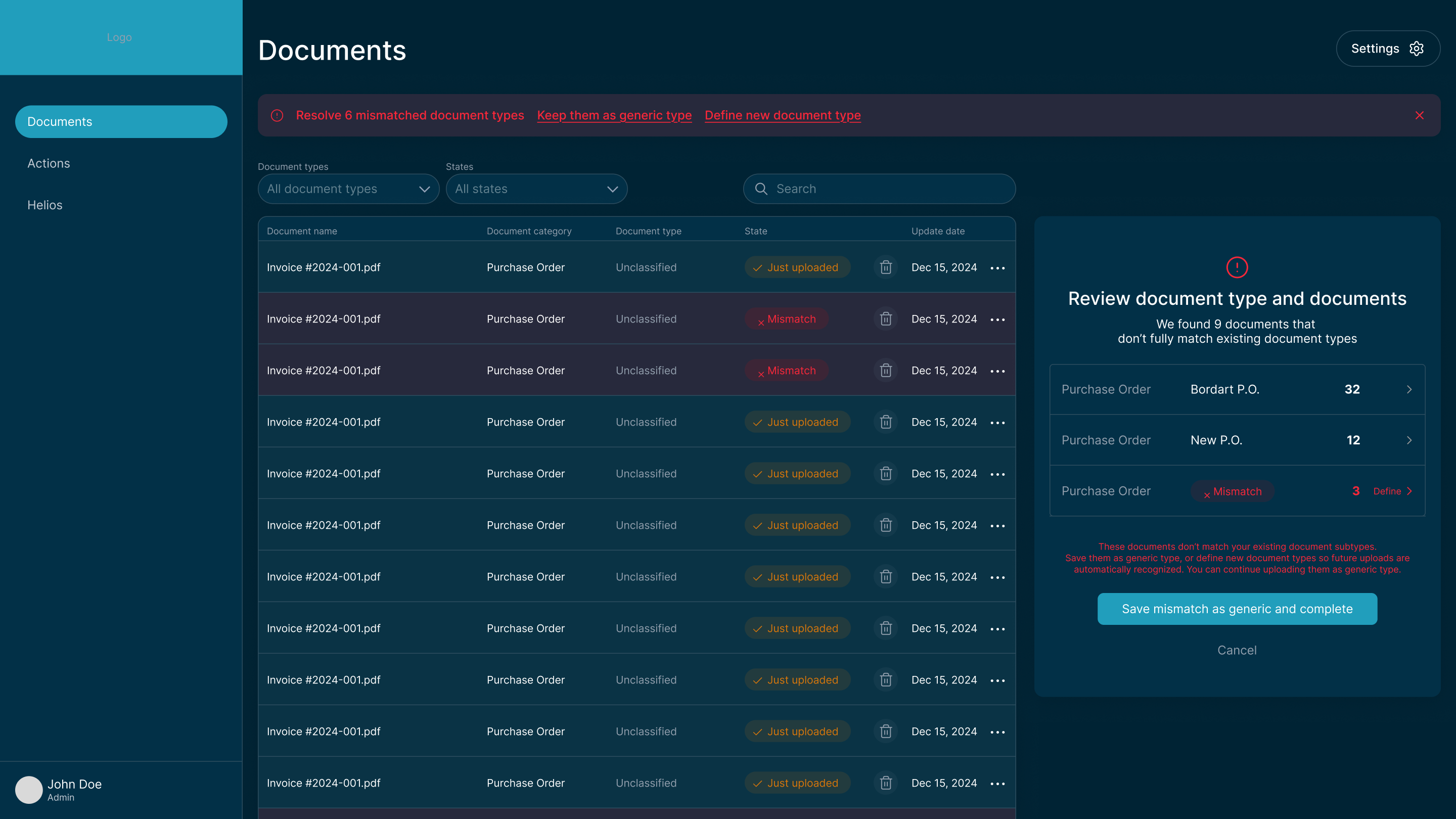
Shredr needed a working product shape fast — not a polished app but something tangible enough to validate assumptions with real prospects. Without a credible artifact, onboarding conversations were theoretical and feedback was limited.

Under a hard three-week deadline and without a full research or cross-functional design team, the challenge was to turn ambiguity into clarity, quickly and iteratively.

What

A developer-ready MVP prototype that:

  • Communicated core value simply and clearly
  • Supported realistic usage scenarios
  • Enabled high-confidence handoff to developers
  • Served as the foundation for early customer feedback

Rather than building a complete product, this output was designed to accelerate learning — intentionally scoped for feasibility and early validation.

How

I used a prototype-first workflow to compress exploration.

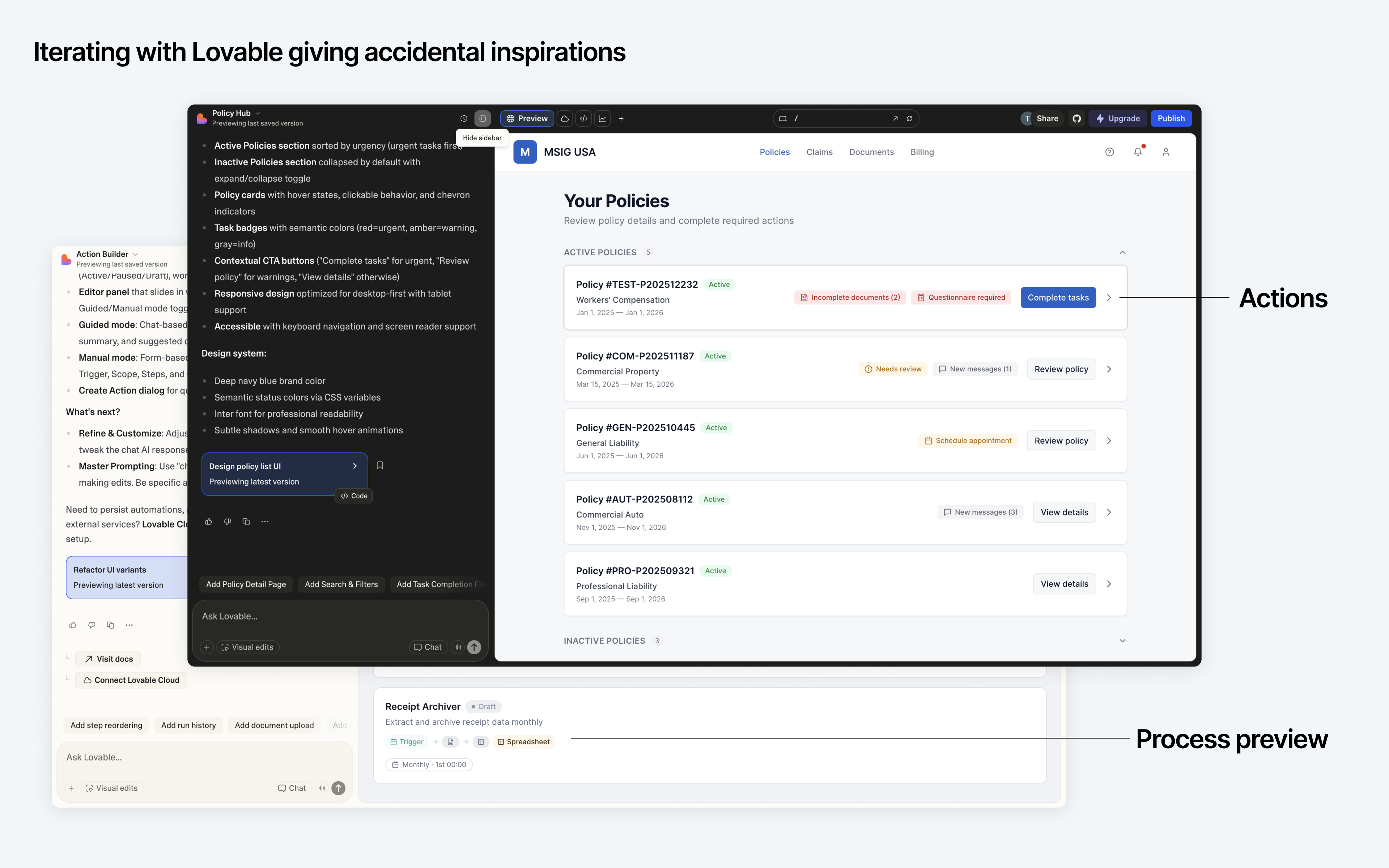
  • Early structural concepts were generated with AI via refined prompts, enabling rapid testing of competing directions.
  • These prototypes acted as thinking artifacts — making assumptions visible and disagreements solvable.
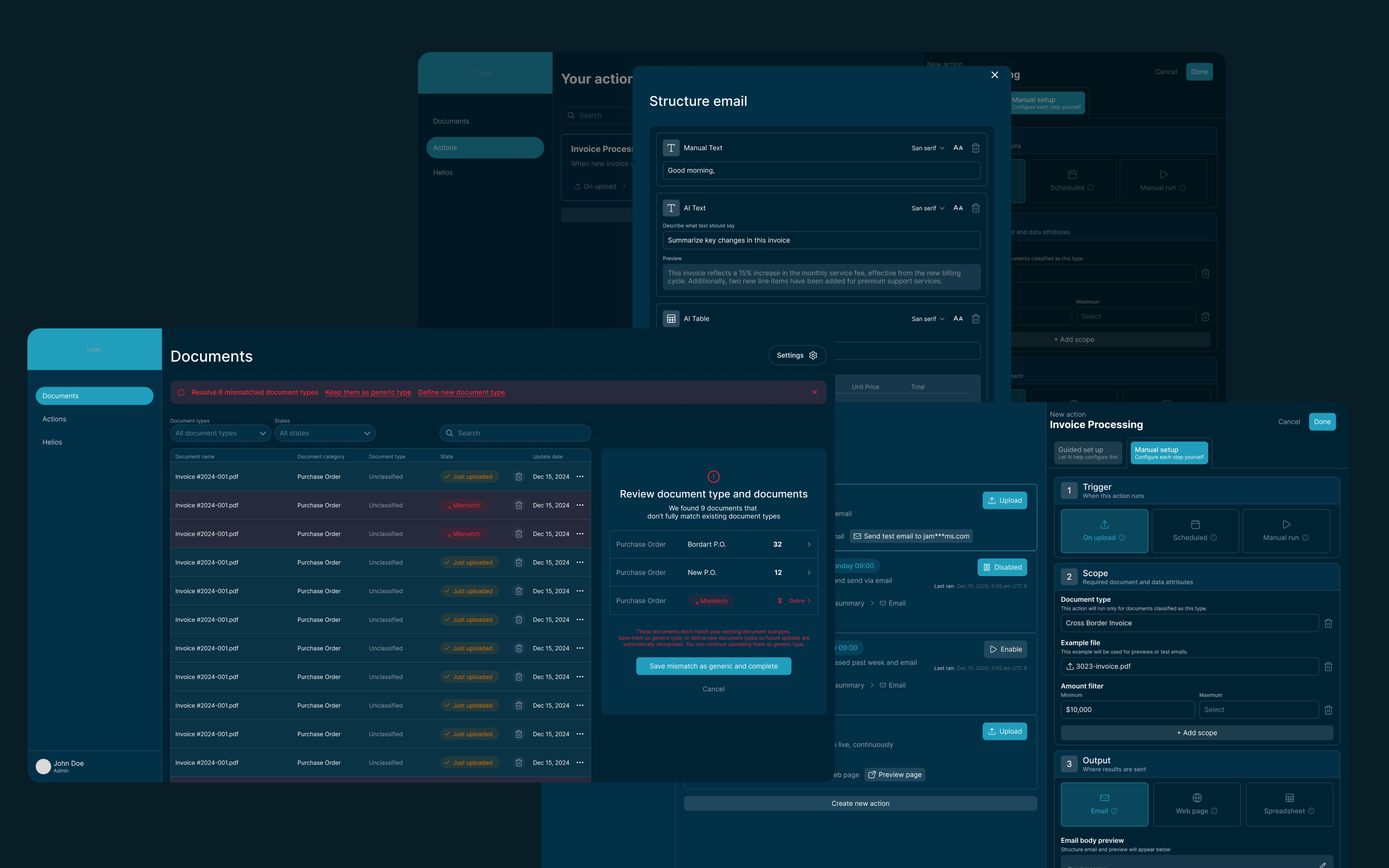
  • Once the product shape stabilized, I translated prototypes into Figma, establishing atomic components, design tokens, and reusable variables to ensure clarity and consistency for development.
  • Feedback was gathered through structured walkthroughs and onboarding simulations that served as proxies for early usability testing under real constraints.

Project Context

Accordion Arrow
Context

Compony

Shredr

Title

Product Designer (Contract)

Role

As a product designer, I was responsible for shaping an initial MVP that could be handed off to developers within a fixed three-week timeline. The focus was on rapid exploration, decision-making, and creating a design foundation that could support early customer onboarding and future iteration.

Project type

New product MVP for early-stage B2B / industrial software

Duration

Approximately 3 weeks (design and prototyping for initial MVP). Iteration and refinement were planned to follow once real users were onboarded.

Product overview

Shredr is an early-stage industrial software product designed to support operational and workflow needs in manufacturing environments.

At this stage, the product’s primary goal was not feature completeness, but credibility — providing a clear product shape that could be used in onboarding conversations, sales discussions, and early validation with potential customers.

The MVP needed to:

  • Communicate core value quickly
  • Support realistic usage scenarios
  • Be structurally sound enough for development

Remain flexible for post-launch iterationDesign decisions prioritized clarity, feasibility, and speed over long-term optimization.

Target audience

Shredr is designed for small to mid-sized manufacturing and industrial businesses that operate with limited internal tooling but complex, real-world workflows. These teams evaluate software quickly based on clarity, feasibility, and perceived fit.

Given the three-week timeline and lean design setup, the MVP was intentionally shaped to support fast onboarding conversations rather than formal research cycles. With a larger team, a comparable human feedback loop would likely span several months. Instead, the process prioritized referencable artifacts and early exposure to real prospects — allowing learning to happen where it mattered most.
Constraints & Design Philosophy

Accordion Arrow

Team & Process Context

This project was executed within a lean design setup, optimized for speed.Under typical conditions, establishing a full human feedback loop — involving multiple designers and formal user testing — would require significantly more time. With a larger team (e.g., dedicated UX and UI roles), a comparable iteration cycle would likely span multiple months.

Given the three-week constraint, the process prioritized:

  • Solo, high-velocity iteration
  • Referencable artifacts over abstract discussion
  • Early exposure to real prospects rather than simulated research

This approach allowed the product to reach real conversations sooner, where deeper collaboration and formal testing could be introduced with greater impact.

Design Developments

Accordion Arrow

Prototyping with AI: Compressing Exploration into Days

To move quickly without sacrificing clarity, prototyping was treated as a decision-making tool, not a presentation artifact.

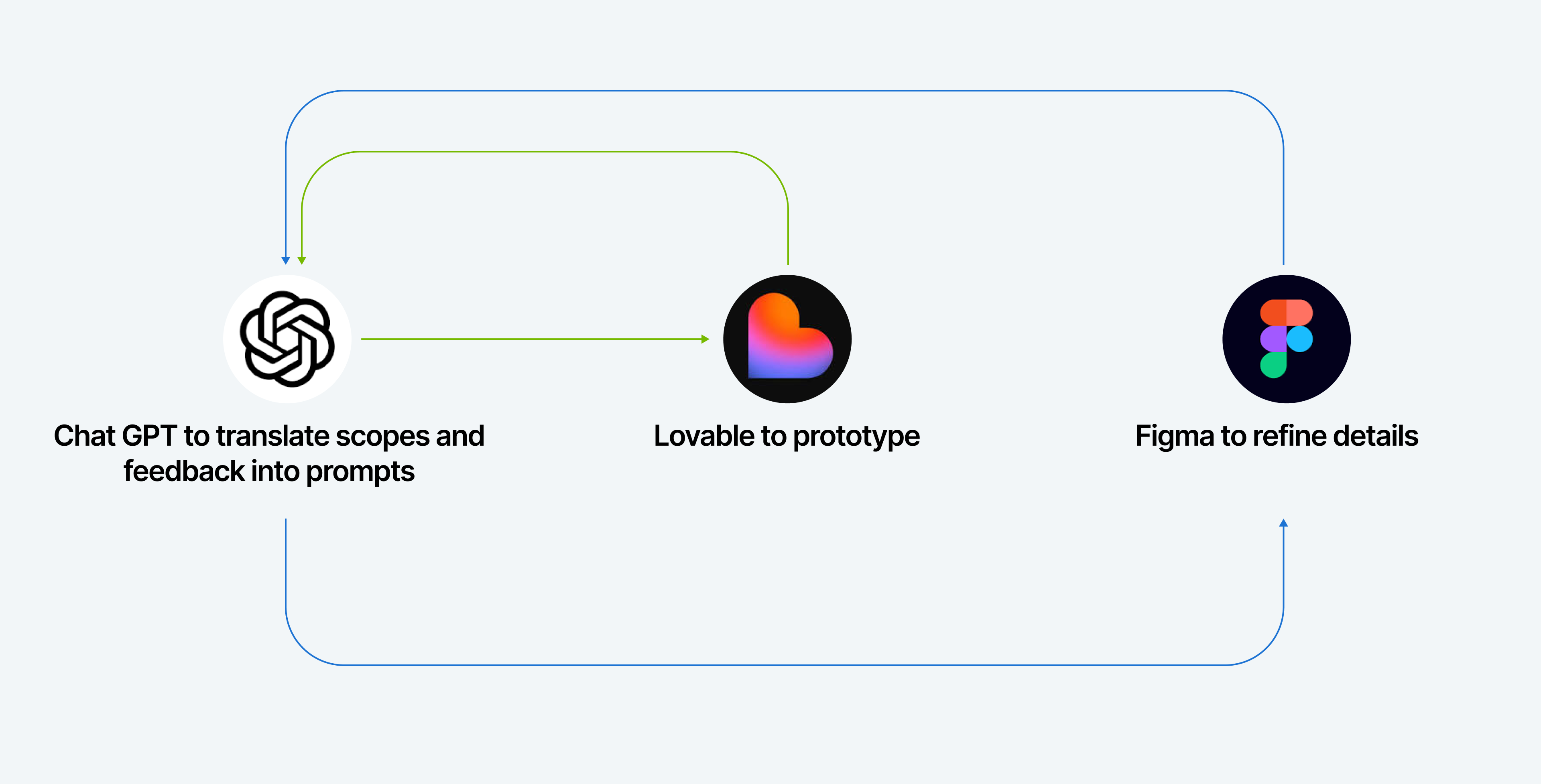
I used ChatGPT to generate and refine Lovable prompts that translated product hypotheses directly into interactive prototypes. This allowed early exploration of layout, hierarchy, and flow without committing to high-fidelity design or system complexity too early.

AI was used deliberately — not to design for me, but to:

  • Accelerate early exploration
  • Compare structural alternatives rapidly
  • Stress-test assumptions before locking decisions

To move quickly without sacrificing clarity, prototyping was treated as a decision-making tool, not a presentation artifact.

I used ChatGPT to generate and refine Lovable prompts that translated product hypotheses directly into interactive prototypes. This allowed early exploration of layout, hierarchy, and flow without committing to high-fidelity design or system complexity too early.

AI was used deliberately — not to design for me, but to:

Translating Prototypes into a Figma System

Once the product’s shape stabilized, the focus shifted from exploration to durability.

Prototypes were translated into Figma to establish a lightweight but consistent design system that could support development and future iteration. Atomic components were defined, and variables for color, spacing, and typography were refined to ensure reuse and reduce ambiguity during handoff.

Figma served as:

  • A systemization layer over exploratory prototypes
  • A shared source of truth for developers
  • A mechanism to refine details without reopening core decisions

This transition marked a clear handoff point: exploration stopped, structure solidified, and the product became buildable — while still remaining flexible enough for post-MVP feedback and iteration.

Challenges & Insights

Accordion Arrow

One of the core challenges in this project was navigating lossy communication — both with AI and with humans.

Translation as a Source of Insight

When working with AI, intent is translated into prompts, and prompts into outputs. This process inevitably loses nuance — but those subtle mismatches often surfaced implicit assumptions that would have remained hidden in direct execution.

Interestingly, the same dynamic exists in human collaboration. In early-stage environments without open or deeply critical communication, feedback often becomes polite, cautious, and ultimately limited in its ability to improve the product.

In both cases, the challenge was not the absence of feedback, but the softening of meaning through translation.

Designing Without Numbers

Another constraint was that most feedback was not backed by quantitative data. Decisions had to be made using common practices, domain expectations, and qualitative judgment rather than metrics or formal validation.

This required a higher standard of reasoning — and a way to ensure decisions were still grounded, not arbitrary.

Response: Making Feedback Referencable

To address these challenges, I relied heavily on referencable artifacts.

Instead of discussing ideas abstractly, feedback was anchored in concrete examples — interactive prototypes, comparative patterns, and known product references. These artifacts reduced ambiguity, made disagreements explicit, and allowed both AI outputs and human feedback to be evaluated against something tangible.

In practice, this turned translation loss into a productive force: moments of misalignment became opportunities to clarify intent, refine direction, and strengthen the product’s foundation.

Get in touch

I'm excited to learn about your project.
Let's collaborate to turn conceptual ideas into concrete results.